
Laser Hair Removal and Waxing can both reduce unwanted hair, but they are not interchangeable services. Waxing removes hair temporarily from the root, while laser treatments use concentrated light to reduce the growth of pigmented hair over a series of appointments. The right choice depends on your hair color, skin tone, treatment area, budget, pain tolerance, timeline, and whether you want short-term smoothness or longer-term reduction.
This guide explains how each option works, what results and costs to expect, how to compare laser hair removal packages and payment plans, and how to find a qualified clinic when searching for treatment near you. Use the details below to prepare better questions and avoid choosing based only on the lowest advertised price.
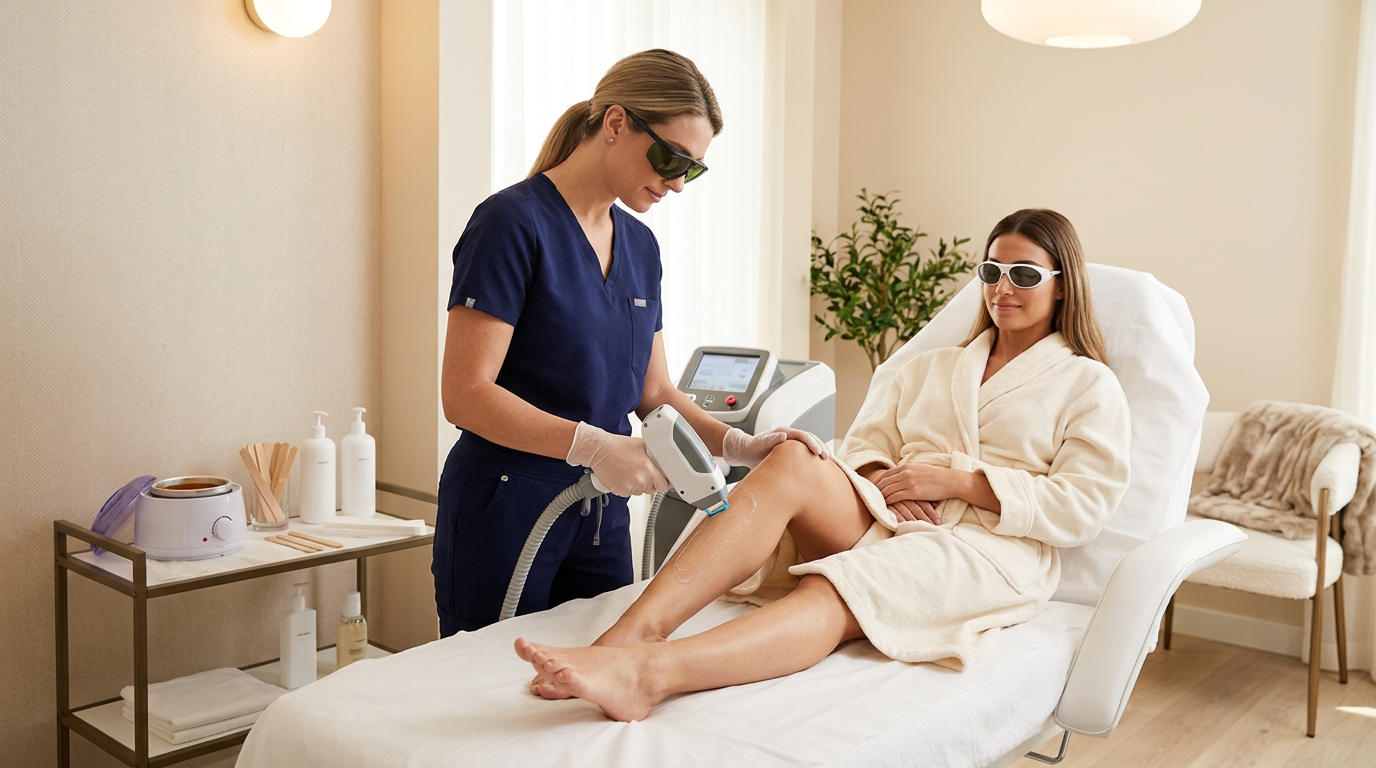
Laser Hair Removal Versus Waxing at a Glance
Laser hair removal is generally a long-term hair-reduction treatment rather than a guaranteed permanent cure. The device targets melanin in the hair shaft and heats the follicle, weakening its ability to produce new growth. Waxing uses warm or hard wax to grip and pull hair out at the root, leaving skin smooth immediately but requiring repeat appointments as the hair cycle continues.
| Factor | Laser hair removal | Waxing |
|---|---|---|
| Typical result | Progressive reduction over multiple sessions | Smooth skin for roughly 2–6 weeks |
| Best hair match | Usually darker hair with contrast against skin | Works on most hair colors and textures |
| Appointment pattern | Often 6–10 sessions spaced about 4–8 weeks apart | Usually repeated every 3–6 weeks |
| Upfront commitment | Higher total investment | Lower cost per visit but ongoing expense |
Choose based on your time horizon. Someone preparing for a vacation may prefer waxing for immediate results, while someone tired of monthly maintenance may find laser treatment more economical over several years.
Laser Treatments Need Multiple Sessions to Catch Different Growth Cycles
Laser energy is most effective when a hair is in its active growth phase. Because hairs do not grow simultaneously, one appointment cannot treat every follicle at its most responsive stage. Most clinics recommend a series of sessions, commonly spaced four to six weeks apart for the face and six to eight weeks apart for larger body areas.
- Complete a consultation and skin-and-hair assessment.
- Attend the initial treatment after shaving the area as directed.
- Return when enough new growth is present for the next cycle, not simply whenever the area looks slightly stubbly.
- Schedule occasional maintenance treatments if regrowth becomes noticeable.
Ask the provider for a realistic session estimate rather than accepting a promise of permanent removal after one or two visits. Request that the treatment plan explain spacing, expected reduction, and what happens if your response is slower than average.
Skin Tone and Hair Color Determine Which Laser Plan Is Appropriate
Laser technology has advanced, but suitability still depends heavily on the contrast between hair pigment and skin pigment. Dark, coarse hair often responds best. Blonde, gray, white, and some red hairs contain less of the pigment the laser targets and may respond poorly or not at all. Darker skin tones can often be treated safely, but the provider must select an appropriate wavelength, cooling system, and energy level.
- Ask which device and wavelength will be used for your skin tone.
- Confirm that the provider has experience treating clients with similar pigmentation.
- Disclose recent tanning, self-tanner, medications, keloid history, and any active skin condition.
- Request a patch test when the clinic considers it appropriate.
Do not judge a clinic solely by its machine brand. Training, settings, skin assessment, and careful follow-up are equally important. A qualified provider should be willing to explain why a particular device is suitable for you.
Waxing Offers Immediate Smoothness but Requires Consistent Maintenance
Waxing remains useful when you need smooth skin quickly or when your hair color is unlikely to respond to laser. The hair is removed from the root, so results generally last longer than shaving. However, waxing does not reduce the follicle’s ability to grow hair permanently, and repeated treatments can cause temporary redness, sensitivity, ingrown hairs, or irritation.
- Hair usually needs to be about one-quarter inch long for the wax to grip effectively.
- Avoid waxing sunburned, broken, irritated, or recently exfoliated skin.
- Follow the salon’s guidance about retinoids, acids, and medications that increase skin sensitivity.
- Choose a provider who uses clean implements and does not double-dip applicators.
If you are considering switching from waxing to laser, stop waxing and plucking several weeks before the consultation unless the clinic gives different instructions. The follicle needs to remain present for laser energy to target it.
The Most Convincing Benefit Is Reduced Daily Maintenance
Laser treatment can be attractive for people managing frequent shaving, razor bumps, ingrown hairs, or recurring waxing appointments. It is particularly convenient for underarms, bikini lines, legs, backs, and other areas that are difficult or time-consuming to maintain. Results vary, but many clients notice slower growth, finer regrowth, and less dense hair after several sessions.
- Less shaving and fewer razor-related bumps
- More predictable long-term maintenance
- Potential savings compared with years of recurring waxing
- Short appointments for smaller areas such as the upper lip or underarms
- Reduced inconvenience before travel, events, or athletic activities
Think in terms of reduction, not flawless hairlessness. Hormonal changes, polycystic ovary syndrome, medications, and genetics can influence regrowth. Ask whether maintenance sessions are included in the clinic’s long-term guidance.
Full-Body Laser Hair Removal Cost Depends on Area, Session Count, and Location
Pricing varies substantially by region, clinic type, technology, treatment area, and whether the quote covers a single session or an entire series. As an approximate U.S. planning range, individual small-area sessions may cost $75–$250, while larger areas can cost $300–$900 or more per visit. A full-body plan may range from roughly $2,000 to $6,000 or beyond across a complete course, although local promotions and package terms can change the total.
| Treatment scope | Approximate per-session range | Common pricing drivers |
|---|---|---|
| Small area | $75–$250 | Upper lip, chin, underarms |
| Medium area | $150–$450 | Bikini, Brazilian, half legs |
| Large area | $300–$900+ | Full legs, back, chest |
| Full body series | $2,000–$6,000+ | Number of areas, sessions, market, maintenance |
Request a written quote that states the number of sessions, included areas, taxes, maintenance pricing, cancellation rules, and expiration dates. A low headline price may exclude consultation fees, numbing products, or touch-up treatments.
Packages and Payment Plans Can Lower the Upfront Barrier
Laser hair removal packages typically bundle several sessions at a lower per-visit rate. This can be financially sensible if the clinic is reputable and the package has flexible scheduling, but buying a large package before a consultation increases your risk if your skin or hair responds differently than expected. Some providers also offer laser hair removal payment plans through in-house financing or third-party lenders.
- Compare the package total with the same number of individual visits.
- Ask whether unused sessions can be transferred, paused, or refunded.
- Check interest, origination fees, deferred-interest terms, and late-payment consequences.
- Confirm whether touch-ups or maintenance appointments are included.
- Find out how long the package remains valid if treatments must be spaced out.
Never let financing pressure you into treating more areas than you can comfortably afford. Get the cash price and financed total in writing, then compare both with at least one other qualified clinic.
Preparation and Aftercare Affect Comfort and Safety
Good preparation helps the laser reach the follicle while reducing avoidable irritation. Most providers ask clients to shave shortly before treatment, avoid tanning, and stop waxing or plucking for a defined period. Instructions differ by device and body area, so the clinic’s written protocol should take priority over generic internet advice.
- Avoid intentional tanning and disclose any recent sun exposure.
- Shave as instructed; do not wax or tweeze the treatment area before laser sessions.
- Arrive with clean skin free of oils, deodorant, and fragranced products when requested.
- After treatment, use gentle cleansing, sun protection, and the recommended moisturizer.
- Delay heat, intense exercise, swimming, or irritating products for the period your provider specifies.
Mild redness or a warm, swollen appearance around follicles can be temporary. Contact the clinic promptly about blistering, severe pain, spreading swelling, pigment changes, or symptoms that do not improve.
Brazilian Treatment Requires Clear Definitions and Professional Boundaries
When searching for Brazilian laser hair removal near you, confirm exactly what the clinic means by “Brazilian.” Some providers treat the front, labia, and between-the-cheeks area; others exclude one or more areas or price them separately. Policies regarding underwear, draping, technician gender, and whether a test patch is required should be discussed before booking.
- Ask which anatomical areas are included in the quoted price.
- Confirm the practitioner’s training and the clinic’s hygiene procedures.
- Ask how privacy, draping, and consent are handled throughout the appointment.
- Disclose irritation, lesions, active infections, or recent procedures before treatment.
A professional clinic should explain the process without pressure or embarrassment. If the answers are vague, the environment feels rushed, or the price changes at checkout, choose another provider.
The Best Laser Hair Removal Clinic Is Defined by Standards, Not Just Reviews
Online searches for laser hair removal near me can produce med spas, dermatology practices, salons, and national chains with very different levels of oversight. Reviews may reveal scheduling and customer-service patterns, but they cannot confirm whether a clinic uses safe settings for your skin. Look for transparent consultation practices, trained personnel, appropriate supervision, and clear medical escalation procedures.
- Verify the provider’s license, certification, or required local credentials.
- Ask who performs treatments and how much experience they have with your skin tone and target area.
- Confirm that the device is maintained and that protective eyewear is provided.
- Read independent reviews for recurring complaints, not just star averages.
- Compare a written quote and cancellation policy with two or more clinics.
Be cautious of guaranteed permanent removal, extreme discounts that require immediate payment, no-consultation bookings, or providers unwilling to disclose the device type. A strong clinic will assess you before selling a package.
Risks and Contraindications Should Be Discussed Before Treatment
Laser hair removal is generally well tolerated when performed with appropriate settings, but it is not risk-free. Temporary redness, swelling, discomfort, and changes in pigmentation can occur. Rarely, burns, blistering, scarring, or paradoxical hair growth may develop. Waxing can also cause irritation, folliculitis, ingrown hairs, or skin lifting, especially when the skin barrier is compromised.
- Tell the provider about isotretinoin history, photosensitizing drugs, active rashes, infections, and recent tanning.
- Ask whether pregnancy, breastfeeding, or hormonal conditions affect the clinic’s policy.
- Discuss cold-sore history before facial treatment.
- Do not conceal medications or attempt treatment over suspicious moles or open wounds.
Ask what side effects are expected, who to contact after hours, and when a clinician should evaluate you. A consultation is a safety step, not merely a sales appointment.
FAQ: Common Questions About Laser and Waxing
Q: Is laser hair removal permanent?
A: It is more accurately described as long-term hair reduction. Many people need a series of treatments and occasional maintenance, and hormonal factors can affect regrowth.
Q: Can I wax between laser sessions?
A: Usually not. Waxing and tweezing remove the follicle’s visible target, which can make the next laser treatment less effective. Shaving is commonly preferred between sessions.
Q: Is laser hair removal painful?
A: Clients often describe a snapping or warming sensation. Discomfort varies by body area, hair density, device, and settings. Cooling systems and clinic-approved comfort measures may help.
Q: How many sessions will I need?
A: Many treatment plans involve approximately six to ten sessions, but the number depends on hair color, density, skin type, hormones, and the area treated.
Q: Does insurance cover cosmetic hair removal?
A: Cosmetic laser or waxing services are usually paid out of pocket. Coverage policies vary when treatment is tied to a diagnosed medical condition, so ask your insurer and provider directly.
Next Steps: Build a Treatment Plan Before You Pay
Start by identifying your goal: immediate smoothness, fewer ingrown hairs, reduced long-term growth, or a combination of these. Bring the target areas, your desired timeline, budget, and relevant medical information to a consultation. If you are comparing Brazilian, full-body, or small-area services, insist on an itemized quote rather than relying on a banner promotion.
- Book consultations with at least two qualified providers.
- Ask for a skin-and-hair assessment and treatment timeline.
- Compare package terms, maintenance costs, financing totals, and refund rules.
- Follow preparation instructions and begin only when you understand the risks.
Waxing may be the practical choice for immediate results or light-colored hair; laser may offer greater long-term convenience for suitable candidates. The best decision is the one that matches your biology, expectations, and budget—not simply the cheapest appointment.