
A low advertised price does not necessarily mean a better cleaning experience. The right provider should fit your home, schedule, standards, and budget while giving you confidence that people entering your space are properly trained and covered. Comparing a local clean service near me listing with a larger full-service company can reveal meaningful differences in reliability, scope, and accountability.
Use the seven comparisons below before requesting a quote. They will help you evaluate cleaning companies in your area based on evidence rather than polished advertisements alone—and make your final choice easier to defend if something goes wrong.
Start by Defining the Cleaning You Actually Need
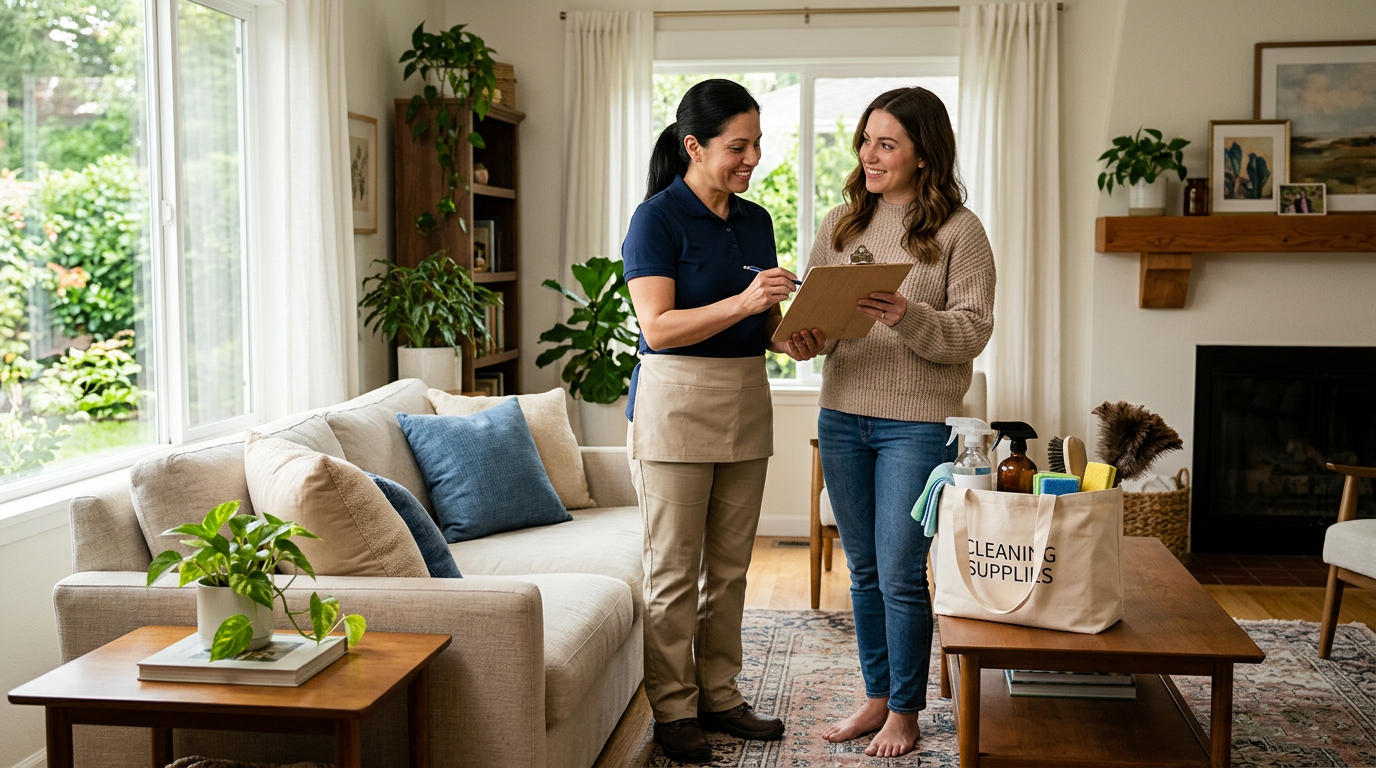
Before comparing companies, write down the outcome you want. A recurring maintenance visit is very different from a move-out reset, post-renovation cleanup, or one-time deep clean. If you ask every provider for a vague “house cleaning” quote, you may receive prices for different services that are impossible to compare fairly.
Note the home’s approximate size, number of bedrooms and bathrooms, floor types, pets, clutter level, and any areas requiring special attention. Also decide whether you expect the cleaner to supply products and equipment. This preparation helps a home clean service near me understand the job accurately.
- Recurring cleaning: routine dusting, vacuuming, mopping, bathrooms, and kitchen surfaces.
- Deep cleaning: more detailed work such as baseboards, doors, reachable fixtures, and buildup removal.
- Specialty cleaning: appliances, windows, carpets, upholstery, or post-construction debris.
Ask each company to quote the same written task list, not merely the same number of rooms.
1. Compare the Exact Service Scope, Not Just the Room Count
Two cleaning services in my area may both advertise a three-bedroom package while delivering very different results. One may include changing linens and cleaning the inside of a microwave; another may treat those as add-ons. A low base price can become expensive once essential tasks are added.
Request a checklist showing what happens in every room, what is excluded, and how long the first visit is expected to take. Clarify whether recurring visits receive a reduced-maintenance scope after the initial deep clean.
| Service type | Common inclusions | Questions to ask |
|---|---|---|
| Standard recurring | Bathrooms, kitchen surfaces, floors, dusting | Are linens, dishes, and trash included? |
| Deep clean | Detailed fixtures, edges, buildup, reachable trim | What areas remain excluded? |
| Move-out | Empty-room cleaning and appliance details | Is a landlord checklist supported? |
| Specialty add-on | Windows, carpet, oven, or upholstery | Is a trained specialist required? |
Choose the provider whose written scope matches your priorities, even if its headline rate is not the lowest.
2. Compare Experience, Training, and Who Will Enter Your Home
Experience matters most when a home has delicate surfaces, pets, heavy buildup, or unusual access requirements. A company that has operated for years may have stronger processes, but longevity alone is not proof of quality. Ask how cleaners are recruited, trained, supervised, and evaluated.
Find out whether the same team returns, whether workers are employees or independent contractors, and how the company handles substitutions. A consistent team can learn your preferences, while a larger rotating crew may offer better coverage during illness or vacations.
- How long has the business served your area?
- Are background checks and reference checks part of hiring?
- Does training cover chemical safety, surface compatibility, and cross-contamination prevention?
- Who is your contact if a cleaner is late, absent, or unable to complete a task?
For specialty work, ask for evidence of relevant training rather than assuming every general cleaner can handle stone, hardwood, high surfaces, or delicate finishes.
3. Compare Insurance, Bonding, and Accountability
Insurance is not an optional trust signal when someone is working in your home. Accidents, damaged property, or an injury can create difficult disputes if the company has no appropriate coverage. A reputable cleaning company near me should be able to explain its coverage without hesitation.
Ask whether it carries general liability insurance, workers’ compensation where required, and bonding or dishonesty protection. Bonding may address certain theft-related claims, but it is not a substitute for property insurance or a guarantee that every loss will be paid.
- Request a current certificate of insurance when the job is substantial or access is ongoing.
- Confirm whether subcontractors are covered under the company’s policy.
- Ask how damage is reported, documented, and resolved.
- Review cancellation, lockout, key, and alarm procedures in writing.
Do not hand over keys or access codes until you understand who is responsible for them and what happens if a cleaner is replaced.
4. Compare Reviews for Patterns, Not Just Star Ratings
Customer feedback can reveal whether a provider performs consistently after the first visit. A five-star average is useful, but the written details matter more: punctuality, communication, missed tasks, billing accuracy, and how complaints were handled.
Read recent reviews across more than one platform and look for repeated themes. Reviews for a national company may reflect a local franchise or branch, so verify that the comments apply to the team serving your address. You can also ask for references from comparable homes or recurring customers, subject to privacy policies.
- Sort for the newest reviews and inspect comments from the last six to twelve months.
- Look for responses to negative feedback that are specific rather than defensive.
- Compare complaints about missed areas with the company’s stated quality-control process.
- Ask how re-cleans or corrections are handled and within what time frame.
Prioritize a company that communicates clearly about problems. No service is perfect, but evasive responses are a meaningful warning sign.
5. Compare Pricing Models, Fees, and Total Visit Cost
Cleaning prices vary by region, home size, condition, frequency, labor time, and add-ons. As a broad U.S. planning range, recurring residential visits often fall around $100–$250, while deep cleans commonly run about $200–$500 or more. Move-out and specialty jobs can exceed those figures. These are approximate ranges, not guaranteed quotes.
Compare the final expected invoice—not an hourly teaser or promotional first-visit rate. Ask whether there are minimum charges, travel fees, supply fees, pet surcharges, cancellation penalties, or higher rates for weekends and holidays.
| Pricing approach | Advantage | Potential drawback |
|---|---|---|
| Flat rate | Predictable budget | Scope may be limited or condition-adjusted |
| Hourly | Flexible for changing priorities | Total cost may be uncertain |
| Per-room package | Easy initial comparison | Add-ons can materially raise the bill |
| Recurring plan | Often lower per visit | May require a schedule or commitment |
Get a written quote that states the estimated duration, included tasks, taxes, and conditions that could change the price. Compare at least three like-for-like estimates.
6. Compare Scheduling Flexibility and Service Reliability
A cleaning service only improves your routine if it arrives when promised. Compare appointment windows, recurring-day availability, rescheduling rules, and the company’s backup plan when a regular cleaner is sick. A very narrow schedule may not work for households with shift workers, pets, or frequent travel.
Ask whether you receive a specific arrival time or a broad window, and how far in advance changes must be made. Also determine whether the company offers one-time bookings before requiring a recurring plan. Flexibility is valuable, but unlimited flexibility may come with premium pricing.
- Confirm the normal arrival window and notification process for delays.
- Ask how holidays, weather disruptions, and missed visits are handled.
- Check whether the same team can service your home consistently.
- Clarify whether a lockout or last-minute cancellation fee applies.
Choose a schedule you can realistically maintain. If reliability is essential, ask for the escalation contact and service-credit policy before booking.
7. Compare Products, Safety Practices, and Customization
Cleaning products affect occupants, pets, surfaces, and indoor air quality. Many cleaning companies in my area now offer fragrance-free, low-VOC, or eco-friendly options, but “green” is not a precise universal standard. Ask what products are used, whether you can supply preferred products, and how cleaners prevent cross-contamination between rooms.
Customization can be more valuable than a long service menu. A household with allergies may prioritize fragrance-free products and careful dust removal; a home with natural stone may need neutral cleaners; a pet owner may need hair removal and odor-focused work.
- Request product names or safety data for high-use chemicals.
- Ask whether microfiber cloths and mop heads are separated or changed between areas.
- Confirm whether the team can avoid bleach, strong fragrance, or specific ingredients.
- Ask which tasks require ventilation, drying time, or residents to leave temporarily.
Put product preferences and surface restrictions in the service notes so they are not lost between visits.
Frequently Asked Questions About Comparing Cleaning Services
Q: How many quotes should I request?
A: Three comparable quotes are usually enough to identify the local market range. Give each provider the same home details and task list so the comparison is meaningful.
Q: Is an independent cleaner better than a cleaning company?
A: An independent cleaner may offer lower prices and a familiar relationship, while a company may provide backup staff, formal insurance, scheduling support, and standardized checklists. Verify coverage and accountability either way.
Q: Should I be home during the first cleaning?
A: It is often helpful to be available for an initial walkthrough and access instructions. After expectations are established, many households use a key or secured entry system, provided the provider has clear access procedures.
Q: What should I do before cleaners arrive?
A: Put away valuables and personal documents, secure pets, clear clutter from priority surfaces, and identify fragile items. Most cleaners can organize lightly, but extensive decluttering may reduce the time available for actual cleaning.
Q: How should I handle a missed task?
A: Photograph the issue, contact the company promptly, and reference the agreed checklist. Ask whether a correction visit is free and how recurring quality concerns are escalated.
Turn the Comparison Into a Confident Booking Decision
After collecting quotes, score each provider against the same criteria: scope, experience, insurance, reviews, total price, scheduling, and product fit. A simple written comparison prevents a persuasive phone call or temporary discount from outweighing important safeguards.
- Send the same room details and task list to three providers.
- Verify the written scope, total price, arrival window, and cancellation terms.
- Confirm insurance, team structure, products, and correction policies.
- Book a one-time or initial deep clean when possible before committing to a long schedule.
- Review the result against the checklist and adjust priorities for future visits.
The best clean service near me is not automatically the cheapest or the largest. It is the provider that clearly matches your needs, communicates its limits, protects your home, and delivers a repeatable standard of care.